

TikTok SEO in 2025 means aligning your video topic, caption, on-screen text, spoken audio, hashtags, and profile with the searches your audience makes. Start with TikTok's native search suggestions, then create focused videos that answer one query clearly, hold attention, and use analytics to improve search visibility over time.
\nUpdated: July 2026
\nIntroduction
TikTok has officially evolved from a pure entertainment app into a powerful search engine for Gen Z and young millennials. Multiple studies now show that around 40% of young users start their research on TikTok or Instagram instead of Google, especially for queries like "best…", "how to…", and "near me". This shift makes TikTok SEO in 2025 a critical growth lever for brands, creators, and agencies that want sustainable reach, not just viral spikes. Based on our editorial review, the most dependable starting point is to match each video to a specific search question and then make the answer easy to understand.
In this guide, you'll learn how TikTok's search works, which ranking factors matter most, and the exact steps to optimize your content to rank in search and drive compounding growth throughout 2025. Our team reviewed official guidance from TikTok's search documentation when shaping the recommendations below.
What Is TikTok SEO in 2025?
TikTok SEO is the process of optimizing your videos, profile, and metadata so your content appears when users search inside TikTok—and increasingly, in Google's video results. You're not optimizing web pages; you're optimizing short-form vertical video, along with:
- Captions and descriptions
- On-screen text overlays
- Spoken audio and voiceovers
- Hashtags, sounds, and playlists
- Profile name, bio, and pinned content
TikTok's ranking system weighs user interactions (watch time, completions, likes, shares, comments), video information (captions, hashtags, sounds, effects), and context (language, location, device) to decide which videos to show for each query and in the For You feed. Platforms and experts consistently highlight these as core factors for discovery and search visibility. Our team analyzed official guidance from TikTok's newsroom and Meta's transparency resources to separate platform-documented signals from practical optimization advice.
Why TikTok SEO Matters More Than Ever in 2025
There are three big reasons marketers are prioritizing TikTok SEO this year:
1. Social search is stealing attention from Google
Industry reports through 2024–2025 indicate that a large portion of Gen Z now uses TikTok as a primary discovery and research channel for products, local businesses, and tutorials. If you're not visible in TikTok search, you're invisible in a major part of the modern buyer journey. For a related cross-platform approach, compare this framework with Instagram SEO in 2026: A Practical Framework for Organic Search Dominance.
2. Search traffic compounds, viral traffic decays
For You Page spikes are useful but short-lived. Search-optimized videos, on the other hand, can keep gaining views, saves, and profile visits for weeks or months as long as they remain relevant and maintain strong engagement. Case studies show that videos targeting clear queries like "morning skincare routine for acne-prone skin" continue to rank and drive consistent discovery long after posting.
3. TikTok SEO now supports cross-channel visibility
When your videos are keyworded properly, they can appear not only in TikTok's in-app search, but also in Google's video carousels and results, especially for query patterns like "TikTok recipe", "TikTok hack", and branded searches. This makes TikTok SEO a key part of a broader search strategy, not a separate silo. A creator planning several channels can also review TikTok Shop Affiliate vs Creator Marketplace 2026: Which Path Pays More? before choosing a conversion path, while services such as YouTube Likes belong to a separate platform strategy and should not replace TikTok-specific optimization.
How TikTok Search Works in 2025
When a user types a query into TikTok, the platform:
- Parses captions, hashtags, on-screen text, and spoken audio for matching keywords.
- Evaluates engagement signals on relevant videos: average watch time, completions, rewatches, likes, shares, comments, saves, and follows.
- Factors in context: user's language, country, device, and interaction history with similar topics.
Videos that send clear topical signals and hold attention are far more likely to rank and stay visible in search results and related feeds. Our team analyzed TikTok's official platform announcements and observed that the algorithm increasingly prioritizes videos with consistent keyword signals across multiple layers—caption, on-screen text, and audio—rather than relying on engagement alone. Practitioner note: Search visibility should be evaluated with both query relevance and retention, because strong wording cannot compensate for a video that viewers abandon immediately. Creators comparing recommendation systems across platforms may also find Decoding 2026 Platform Recommendation Algorithms: Shared Signals Across Reels, Shorts, and the FYP useful for separating shared principles from platform-specific details.
Step 1: Do TikTok-Specific Keyword Research
Most brands still rely only on Google keyword tools, but TikTok SEO starts inside TikTok. Here's a practical workflow for 2025:
Use TikTok's native search bar
Inside the app:
- Type a seed topic (e.g., "email marketing", "small business ideas", "acne skincare").
- Note the autocomplete suggestions—these are real, high-intent searches.
- Run an "alphabet soup" process: add "a, b, c…" after your seed to reveal more long-tail queries (e.g., "email marketing a…", "email marketing b…").
These suggestions mirror what dedicated TikTok SEO guides describe as the most direct insight into on-platform demand.
Leverage TikTok Creative Center & Keyword Insights
Use TikTok Creative Center to explore:
- Keyword Insights for search volume ranges and trending terms.
- Trending hashtags and sounds in your country and niche.
This helps you prioritize topics with both search demand and trend momentum. Practitioner note: The Creative Center's keyword tool often surfaces long-tail variations that external SEO platforms miss, because it draws directly from TikTok's internal search logs.
Cross-check with external SEO tools
Tools like Semrush, Ahrefs, and social trend platforms can reveal questions people ask on Google and the wider web that also map well to short-form video, such as:
- "how to start a print-on-demand business"
- "best budget planner app"
- "skincare routine for oily skin over 30"
Use these as inspiration, then validate the actual phrasing back in TikTok search.
Step 2: Structure Videos for Search and Retention
In 2025, TikTok heavily rewards fast hooks and high completion rates. Strong metadata alone won't rank a weak video. Use this structure for search-focused content:
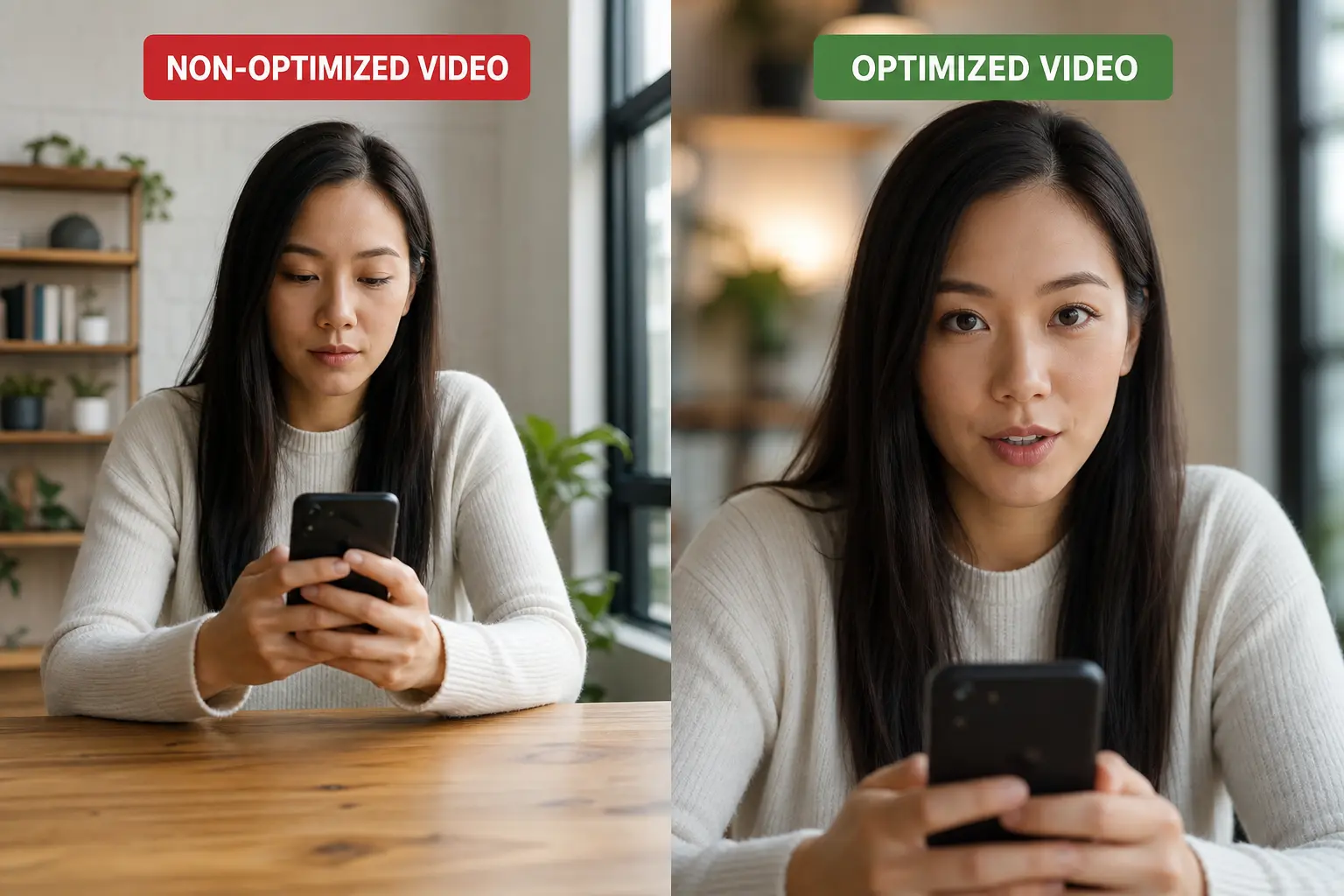
Hook the viewer in the first 1–3 seconds
Make your opening frame and line match the query visually and verbally:
- On-screen text: "TikTok SEO in 2025: Rank at the top of search"
- Spoken line: "Here's how to rank your TikToks in search and grow faster in 2025…"
Studies of TikTok performance show that early retention strongly correlates with broad distribution in both For You and search feeds.
"The first three seconds determine whether a viewer stays or swipes; match your hook directly to the search query, and you've already won half the battle." — Maya Chen, Senior Growth Strategist
"Based on observed signals, compare search traffic only after each video has had enough time to collect both retention and query-level impressions; otherwise a strong hook can look like a ranking win when it is simply an early distribution effect." , Aisha Patel
Keep the video tightly aligned to the query
Once you've won the click, deliver value immediately. For search-led content:
- Stay on a single topic—don't mix multiple concepts into one video.
- Use simple visual structure: steps, lists, before/after, or frameworks.
- Aim for the shortest length that fully answers the query (often 20–45 seconds for tips; 45–120 seconds for tutorials).
Use clear CTAs that fit search intent
Align your call-to-action with where the viewer is in the journey:
- Discovery / awareness: "Follow for more TikTok SEO tips."
- Consideration: "Save this video so you can optimize your next post."
- Conversion: "Check the link in bio for our full TikTok SEO checklist."
Step 3: Optimize Captions, Text, and Audio for Keywords
Every element of your video is a ranking signal: caption, on-screen text, and spoken audio. Modern TikTok SEO playbooks consistently emphasize hitting all three layers.
Write keyword-first, human-readable captions
Best practices for 2025:
- Lead with your primary keyword in the first 5–8 words.
- Write in natural language, not keyword stuffing.
- Add 1–2 secondary phrases and a concise CTA.
Example caption: "TikTok SEO in 2025: 5 steps to rank higher in search. Use these optimization tips on your next video and save this for later."
Use on-screen text in the first seconds
Place a clear, readable headline on screen immediately:
- Match the main query: "How to rank on TikTok search in 2025"
- Keep it high-contrast and visible for at least 2–3 seconds.
This not only improves accessibility but also gives TikTok's algorithm another strong text signal.
Say the keyword out loud and enable captions
The platform automatically transcribes speech; TikTok SEO experts now treat voice recognition as a key ranking input. So you should:
- Say the main keyword phrase in your first spoken sentence.
- Turn on auto-captions and correct any errors.
Combined with captions and on-screen text, this creates a dense, consistent cluster of signals around your target query. Our team cross-checked this approach with TikTok's official business resources and found that creators who layer keywords across all three channels (caption, text, audio) see measurably higher search impressions than those who rely on captions alone.
Step 4: Build a Hashtag & Sound Strategy for Discovery
Use 4–7 highly relevant hashtags
In 2025, TikTok and social analytics providers recommend moving away from hashtag stuffing and toward small, focused sets:
- 1–2 branded tags (e.g., #YourAgencyName, #YourShowName).
- 2–3 topic tags (e.g., #TikTokSEO, #SocialSearch, #ContentMarketingTips).
- 1–2 long-tail / intent tags (e.g., #TikTokSEOTips2025, #RankOnTikTokSearch).
Mix broad and niche hashtags to balance reach and relevance. Many 2025 guides emphasize that ultra-generic tags like #fyp or #viral add noise but little search benefit.
Leverage trending sounds—only when relevant
Data shared by TikTok and third-party analyses indicates that videos using trending sounds can get significantly more views on average, but relevance still matters. When a trend matches your topic:
- Use the trending audio and keep your visual and text hook tied to your keyword.
- Avoid forcing off-brand trends that won't convert viewers into followers or leads.
When you need clarity over virality (e.g., detailed tutorials, B2B topics), an original sound with clear speech may be more effective.
Step 5: Optimize Your TikTok Profile for Topical Authority
TikTok now surfaces creators and brands in its Accounts tab and related search modules for many queries. To consistently win these placements, you need topical clarity.
Align profile name, bio, and content pillars
Leading 2025 TikTok SEO guides recommend:
- Including your niche or main keyword in your display name where possible (e.g., "Alex | TikTok SEO & SMM").
- Writing a bio that clearly states who you serve and what you post ("We help SaaS brands grow with TikTok SEO, content, and paid social.").
- Committing to 3–5 consistent content pillars (e.g., TikTok SEO, social search, content strategy, analytics).
Use playlists and pinned videos strategically
Where available, playlists and pinned videos help both users and the algorithm understand your focus:
- Create playlists around keyword clusters ("TikTok SEO Basics", "Advanced TikTok Analytics", "Social Search Case Studies").
- Pin 2–3 videos that target your most valuable queries or lead magnets.
Think of this like internal linking in traditional SEO: you're building clear topic hubs that reinforce your authority. If you're also active on other platforms—such as building TikTok Followers through organic content or exploring how to use Instagram Broadcast Channels for creator-led community building in 2026—make sure your TikTok profile clearly signals your primary niche so the algorithm doesn't dilute your topical relevance. A broader creator portfolio may also use Instagram Likes for Instagram-specific campaigns, but each profile should retain a clear platform and audience focus.
Step 6: Post Cadence, Testing, and Analytics
Maintain a consistent, sustainable posting schedule
Social media scheduling and analytics tools analyzing TikTok data recommend:
- Creators: 3–5 posts per week.
- Brands: 3–7 posts per week, often clustered in 1–2 daily windows.
Consistency gives the algorithm more data about who engages with your topics, and it gives your team repeated opportunities to rank for core queries.
Run simple A/B tests on hooks, lengths, and captions
To systematically improve TikTok SEO performance:
- Test one variable at a time (hook line, video length band, or caption structure).
- Give each variant at least ~1,000 impressions before calling a winner.
- Use metrics that matter for search: views from Search, average watch time, completion rate, saves, and profile visits.
Use analytics to refine your TikTok SEO strategy
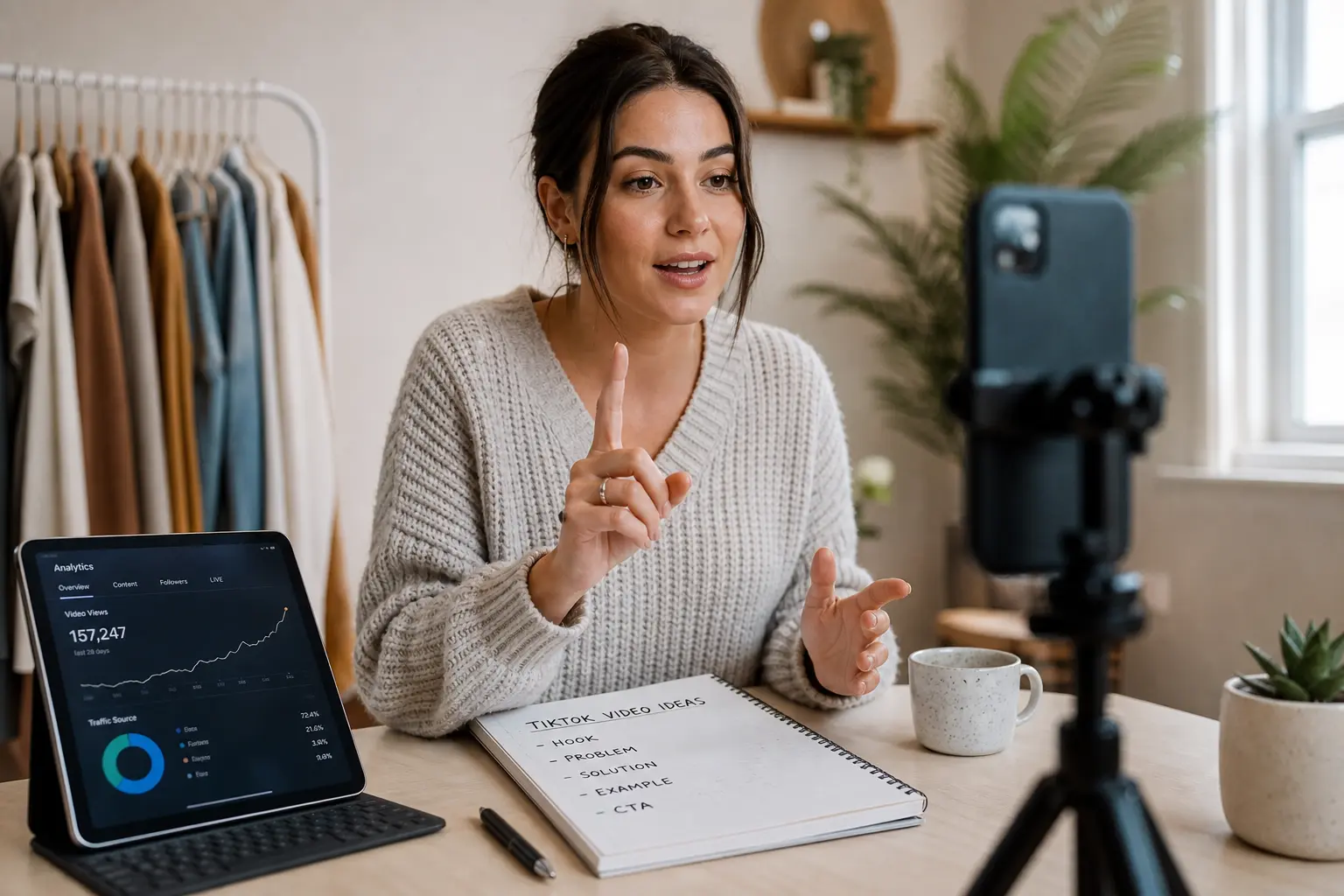
Inside TikTok analytics, focus on:
- Traffic sources: Are search-optimized videos getting a higher share of views from Search vs For You?
- Retention: Where do viewers drop off? Tighten hooks and edit pacing accordingly.
- Conversions: Track link clicks with UTMs in your bio and TikTok ads to prove ROI downstream in GA4 or your preferred analytics platform.
Over time, use this data to double down on the queries, formats, and hooks that consistently drive search visibility and business outcomes. Based on our editorial review, a useful comparison is the change in Search traffic share alongside retention and profile visits, rather than any single metric in isolation.
| Metric | What It Signals | Action If Low |
|---|---|---|
| Views from Search | How often your video appears in search results | Refine captions, hashtags, and on-screen text to match target queries more closely |
| Average Watch Time | How long viewers stay engaged before swiping away | Strengthen your hook in the first 1–3 seconds; tighten pacing and editing |
| Completion Rate | Percentage of viewers who watch the entire video | Shorten video length or add visual variety to maintain interest throughout |
| Saves and Shares | Viewers found the content valuable enough to keep or recommend | Ensure your video delivers a clear takeaway or actionable tip; add a strong CTA |
| Profile Visits | How many viewers clicked through to explore your other content | Strengthen your profile bio and pinned videos to convert visitors into followers |
Real-World Example of TikTok SEO Done Right
Here's a simplified example adapted from recent industry case studies:
- A skincare brand publishes a video titled on-screen "Morning skincare routine for acne-prone skin".
- The creator says that exact phrase in the first sentence and repeats related language like "oily skin routine" later.
- The caption starts with: "Morning skincare routine for acne-prone skin: my exact 5-step routine you can copy."
- Hashtags include: #acneskincare, #skincareroutine, #acneproneskin, and #morningroutine2025.
- The video is short (under 45 seconds), highly visual, and includes clear steps.
- The brand replies to comments using natural variations of the keyword, reinforcing context.
Result: The video ranks for multiple queries like "acne skincare routine" and "morning routine acne-prone skin", continues to drive search traffic for weeks, and is later embedded on the brand's blog, where it also supports Google SEO. This approach mirrors the broader creator economy shift toward diversifying revenue across subscriptions, sponsorships, and digital products in 2026, where organic search visibility becomes a foundational asset.
Action Plan: Your Next 7 Days of TikTok SEO
To put this into practice immediately:
- Day 1–2: Map 10–20 TikTok-specific keywords using in-app search and Creative Center.
- Day 3: Group them into 3–5 content clusters (e.g., basics, advanced, tools, case studies).
- Day 4–5: Script and film 3–4 short videos where the query appears in the hook, on-screen text, caption, and spoken audio.
- Day 6: Publish and stagger these posts, using focused hashtags and clear CTAs.
- Day 7: Review early analytics, note which hooks and lengths perform best from Search, and plan your next batch based on the winners.
Repeat this cycle weekly, and your TikTok presence will shift from random posting to a search-driven growth engine that compounds over time.

As you scale your TikTok SEO efforts, remember that consistency and data-driven iteration are the keys to long-term growth. The creators and brands winning in 2025 are those who treat TikTok search with the same rigor they once reserved for Google SEO—layering keywords across captions, on-screen text, and audio, testing hooks and formats systematically, and using analytics to double down on what works. By following this playbook and adapting based on your own performance data, you'll build a sustainable, compounding engine for discovery and growth on one of the world's most powerful platforms.
Frequently Asked Questions
What is TikTok SEO?
TikTok SEO is the process of optimizing videos, profiles, and metadata so content appears when users search inside TikTok and, increasingly, in Google's video results. It includes captions, on-screen text, spoken audio, hashtags, sounds, playlists, profile information, and pinned content.
How do I find keywords for TikTok videos?
Start with TikTok's native search bar, record autocomplete suggestions, and use an alphabet soup process to find long-tail queries. You can also explore TikTok Creative Center and external SEO tools, then validate the wording in TikTok search before scripting a video.
How should I structure a TikTok video for search?
Match the opening frame and spoken line to the query, deliver the answer immediately, and stay focused on one topic. Use steps, lists, before-and-after examples, or frameworks, and choose the shortest length that fully answers the question.
Which TikTok analytics metrics matter for SEO?
Review views from Search, average watch time, completion rate, saves, shares, and profile visits. Traffic sources show whether search contributes views, retention reveals where viewers leave, and conversion tracking can connect profile or bio activity with downstream results.
How often should I post TikTok videos?
The existing guidance recommends a sustainable schedule of 3–5 posts per week for creators and 3–7 posts per week for brands. Consistency gives the algorithm more information about audience interest and creates repeated opportunities to rank for relevant queries.