Buy YouTube Views Delivery Starts in Minutes
Give us the public watch URL of your video and nothing else. Delivery starts within minutes, and a 30-day refill restores the number if YouTube's validation takes part of it back.
How Ordering YouTube Views Works
Pick a package
Choose a Standard or Premium tier on the selector above. Standard runs from 500 views at $1.99 to 50,000 at $69.99; Premium starts at $3.99 for 500 and reaches $139.99 at 50,000. Premium buys a slower arrival pattern, not a different YouTube. The selector is the authoritative price.
Paste the watch URL and pay
Paste the public watch URL, the youtube.com/watch or youtu.be link anyone can open, and pay. A view has to be produced by playing the video, so it must be public rather than private, unlisted or age-restricted. No Google password, recovery code or Studio access is needed.
Delivery starts, then YouTube audits
Playback begins within minutes and arrives gradually rather than in one burst. The public counter runs behind it, because YouTube validates views before publishing them. The number often sits still, then moves in a step, and can settle lower once that check finishes.
30 days of refill cover
For 30 days after delivery, a drop in the count is topped back up on request. The refill restores a number and nothing beyond it: not authenticity, not watch time, not average view duration, and no protection from how YouTube decides to treat the views.
What You Are Actually Buying
Watch URL only, no account access
Playback happens on the public side of the video, so the link is all we take. No sign-in, no authorisation screen, no extension, and nothing in our hands that could open your Google account or your channel.
Paced around YouTube's validation
YouTube verifies views before it publishes them, which is why counters freeze and later correct themselves. Delivery is spread to sit inside that audit rather than dropping a block of playback onto a video at once.
30-day refill on the count
If the delivered number falls within 30 days, we restore it. The cover is the figure under the player. It does not extend to authenticity, to watch time, or to how YouTube classifies the traffic.
The retention trade-off stated up front
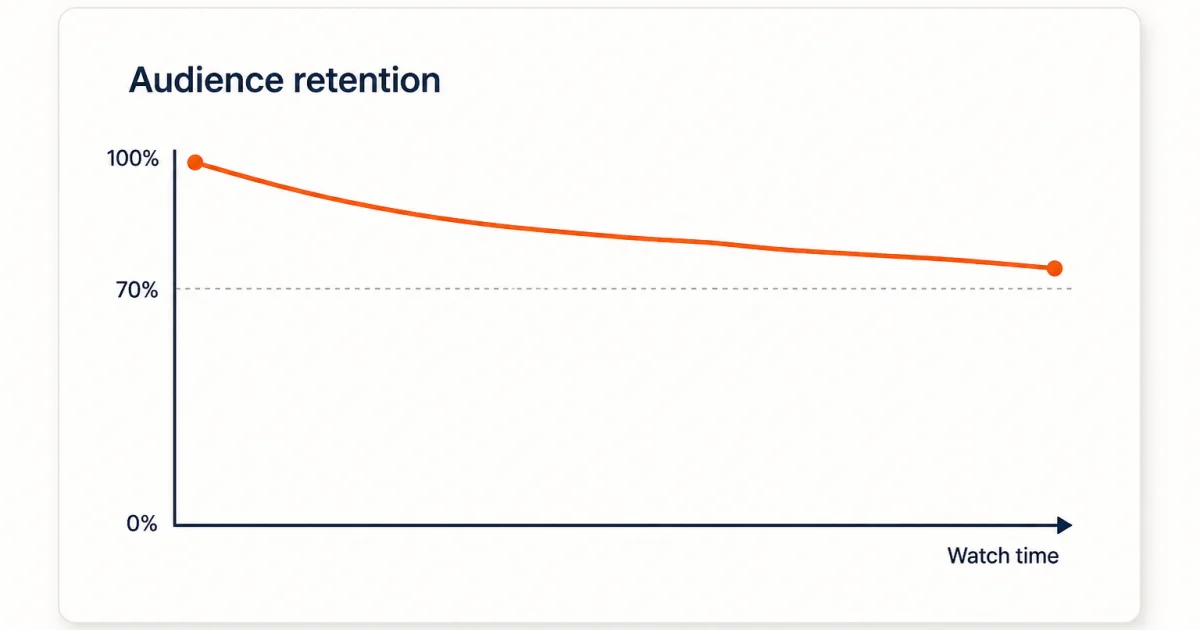
Bought views enlarge the denominator of average view duration while adding almost nothing to the numerator. The public count rises while the metric recommendations run on falls. You should decide with that in view.
Mechanisms, not invented numbers
We quote Partner Programme thresholds because YouTube publishes them. We do not invent percentages about how ranking weighs signals, and every effect described on this page can be checked in your own Studio analytics.
Prices shown before you commit
Standard runs 500 at $1.99, 1,000 at $3.49, 2,500 at $6.99, 5,000 at $14.99, 10,000 at $24.99, 25,000 at $49.99 and 50,000 at $69.99. The selector above is authoritative.
Starts in minutes, then spreads
Most orders begin moving within minutes of payment and continue from there. A block that lands in one session and then stops looks like what it is, both on the watch page and in the analytics.
Channel risk we do not hide
Purchased views conflict with YouTube's terms. Counts can be stripped, watch time can be excluded from monetisation review, and channels can be actioned. No panel removes that risk, and we will not claim ours does.
YouTube Views: Common Questions
How Ordering YouTube Views Works
You choose a package on the selector above, paste the public watch URL, and pay. The order goes to our fulfilment network, playback begins arriving shortly afterwards, and no part of it touches your Google account.
The URL is the only thing we need: the youtube.com/watch or youtu.be link anyone can open. A view differs from most things sold on this site in one practical way, in that it has to be produced by opening and playing the video. That puts a single requirement on your side, which is that the video is reachable: public, not private, not unlisted, not age-restricted. A video our network cannot open is one it cannot play, and an order placed on it sits unfulfilled.
There is no sign-in step, no browser extension, no authorisation screen and no channel permission to grant. We never need a Google password, a recovery code, a two-factor code, a session cookie or a Studio invitation, and a service asking for any of those has stepped outside what the job requires. Standard packages run from 500 views at $1.99 up to 50,000 at $69.99, with 1,000 at $3.49, 2,500 at $6.99, 5,000 at $14.99, 10,000 at $24.99 and 25,000 at $49.99. Premium starts at $3.99 for 500 and reaches $139.99 at 50,000. The package selector on this page is the authoritative price.
Why a YouTube View Behaves Unlike Any Other Count
YouTube is the one platform on this site that audits a count before it publishes it, and then reports back to the creator the exact metric that a bought view damages. Both halves shape what this product can and cannot do.
A view is not registered when playback starts
Opening a video does not add to the public number. YouTube registers what it judges to be meaningful playback and then validates that record before publishing it. This is why the counter on a video routinely stops moving for a stretch while verification runs, and why the figure can settle lower once it resumes. It is the question we are asked more than any other after a views order, and the honest answer is that the platform is auditing, and some portion of what was delivered may not survive the audit. A frozen counter does not indicate a stalled order, and one that corrects downwards is not evidence of a short delivery; it is the platform reaching a verdict on playback it already recorded.
Watch time drives distribution, and views dilute it
Recommendations are built on watch time and average view duration rather than on the number under the player. Average view duration is a ratio: total time watched divided by the number of views. A purchased view arrives carrying little or no watch time, so it lands in the denominator and contributes almost nothing to the numerator. Order a large package and the public count rises while average view duration in YouTube Studio falls. The figure you might show a sponsor improves; the figure the recommendation system reads gets worse. YouTube is unusual in publishing both numbers back to you, so this is not a trade-off you have to take on faith. It appears in your own retention report shortly after delivery, and it is why this page argues for restraint on size.
Monetisation and the word valid
The Partner Programme asks for 4,000 valid public watch hours in 12 months, or 10 million valid public Shorts views in 90 days, alongside a subscriber requirement that belongs to our YouTube subscribers page rather than this one. The word doing the work in those thresholds is valid. YouTube reviews where watch time and views originated before crediting them, and purchased playback is precisely the category that review exists to identify. Views bought here should not be treated as progress towards monetisation, and buying them is the least effective way to approach that hours threshold. That argues against this sale, and we would rather say it than take an order placed on a misunderstanding.
What buying views will not do
It will not push the recommendation system towards your video, because the signal that decision turns on is duration, not count. It will not produce subscribers, comments, buyers or a community, since delivered playback is a number rather than an audience and will not return for your next upload. It will not rescue a video people close early, and it makes nothing permanent, authentic or invisible to review.
Safety, Risk, and the Limits of the Refill
Two different questions hide inside the word safe, and they have different answers.
The first is credential safety. Because a view is produced by playing a public video, we never hold anything capable of signing into your Google account or your channel. There is no token to leak, no password to lose and no Studio access to revoke. That is a property of how views are fulfilled, not a promise you are asked to trust.
The second is channel risk, and there the answer is that the risk exists and no panel can remove it. Purchased views conflict with YouTube's terms of service. The platform can strip counts it classifies as invalid, exclude the associated watch time from monetisation review, and act against channels it judges to be inflating metrics. A service telling you that bought views are compliant, undetectable or permanent is telling you something it is not in a position to know.
The refill runs for 30 days and is narrower than the word suggests. If the delivered count drops inside that window, we top it back up to the number you ordered. What is restored is a number. The refill does not make the playback authentic, does not convert into watch time, does not lift average view duration, does not change how YouTube classifies the traffic, and is not a promise that the count holds after the window closes. Our refund policy sets out where a refill applies and where a refund does instead.
Delivery Pace and the Counter Lag
Most orders begin within minutes of payment and then continue at a measured pace rather than landing at once. The spread is deliberate: a video that takes on a full package in one afternoon and then flatlines produces a shape in the analytics that reads as purchased.
Expect the public counter to run behind what has been delivered. Because of the validation described above, the number updates in steps, sometimes sitting still for a long stretch before it moves. Judging an order by that counter on the first day will usually mislead you, and asking for a re-send because the number has not moved tends to stack fresh playback on top of playback the platform has not published yet.
Expect the retention side of Studio to look worse afterwards rather than better. That is the mechanism working as described, not a fault in the order. If the video is going into a sponsor pitch, decide in advance which figure you are judged on, because this product raises one at the cost of the other.
Choosing a Package Size
The common mistake on this page is buying too large. A view count far out of proportion to the likes and comments under the same video does not read as a hit; it reads as bought, to a viewer scrolling the page and to any system checking whether the ratios hold together. The size that helps sits plausibly beside the engagement the video already carries and the channel it lives on.
For a new channel testing whether a topic lands, 500 or 1,000 lifts a video out of a handful of views without distorting anything. The middle tiers suit videos that already have organic traction and a like count to match. The largest tiers only make sense where 50,000 would not look strange beside the rest of the back catalogue, and the duration cost applies there across a bigger denominator. Premium costs more per thousand and buys a steadier arrival pattern; it faces the same validation and terms as Standard, and carries no more watch time.
If proportional engagement matters more to you than a larger counter, YouTube likes may be a better place to put the same money.
500 Views $1.99
Buy Now